Igloo Software • UX Manager • 5 min
Designing Igloo Flex: Modernizing a Legacy Enterprise Platform to Scale

Confidentiality notice
This work reflects my time at Igloo Software. Specific customer data and internal details have been generalized to focus on platform strategy, system design, and UX leadership outcomes.
Challenge
Igloo’s legacy intranet platform had become fragmented and inconsistent. It was hard to scale, and users had to work through complex, hard-to-learn workflows.
Strategy
We moved to a system-driven approach: shared patterns instead of one-off solutions, and one foundation every team could build on.
Results
Flex got a scalable foundation. The experience became more consistent, and teams could build more predictably on a modern intranet platform.
Challenge
Modernizing a legacy platform without disrupting customers
As Igloo’s platform evolved, it became increasingly fragmented. Different teams introduced their own patterns and workflows, resulting in an inconsistent and difficult-to-maintain experience.
Core tasks were harder than they should have been. Users often needed training to complete basic actions, and the lack of clear hierarchy and structure made navigation confusing.
The product had also grown to support too many edge cases, adding unnecessary complexity to the experience. What began as a flexible system had become harder to use, harder to scale, and harder to evolve.
At the same time, expectations for enterprise platforms were shifting toward more cohesive, modern, and scalable solutions. It was clear that small, incremental fixes wouldn’t be enough.
This wasn’t a redesign problem. It was a systems problem.
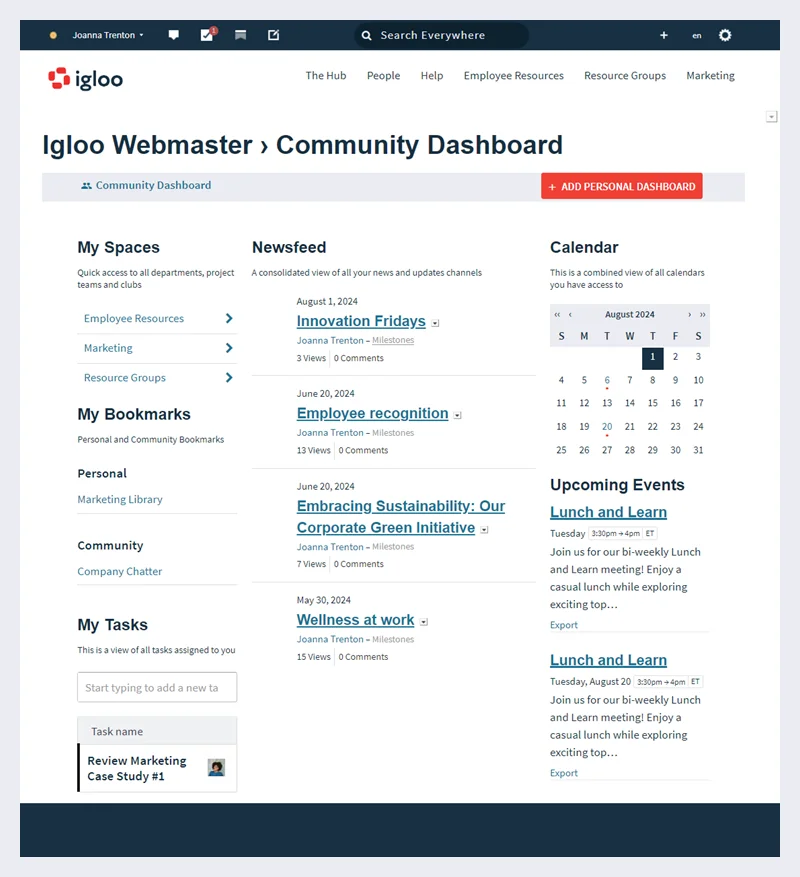
Before: Fragmented, inconsistent, and difficult to navigate at scale.
Strategy
Rebuilding the foundation through
system-driven design
We shifted from designing individual features to building a system that could scale across teams and use cases.
We focused on the workflows most users rely on and reduced unnecessary complexity by aligning around shared patterns and behaviours. This created consistency across the product and made it easier for teams to build without reinventing solutions.
A big part of this was a reusable design system. It sped up work, cut duplication and made the experience more predictable across the platform.
We also strengthened the connection between design decisions and user insight, grounding product direction in real-world usage and feedback.
The goal was to create a foundation that could grow with the product without reintroducing fragmentation.
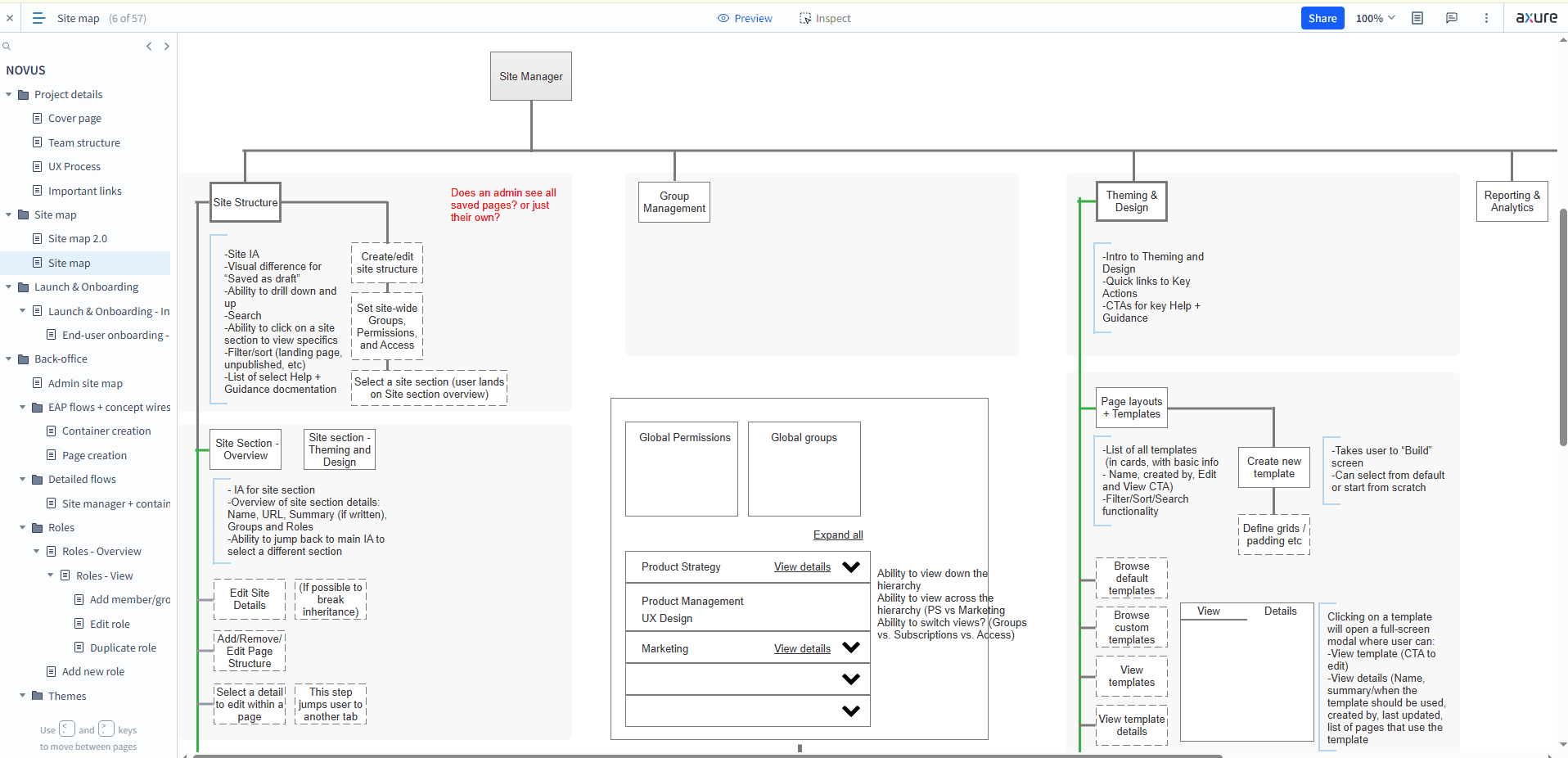
Before: Fragmented, inconsistent, and difficult to navigate at scale.
Results
Establishing a scalable foundation for the next generation platform
Flex became more consistent and easier to scale as shared patterns replaced one-off solutions. Teams began relying on the design system, reducing ambiguity and making implementation more predictable.
That stopped many of the inconsistencies that had built up in the legacy platform from coming back, and teams could build faster and with more confidence.
Flex became the foundation for Igloo’s modern intranet experience.
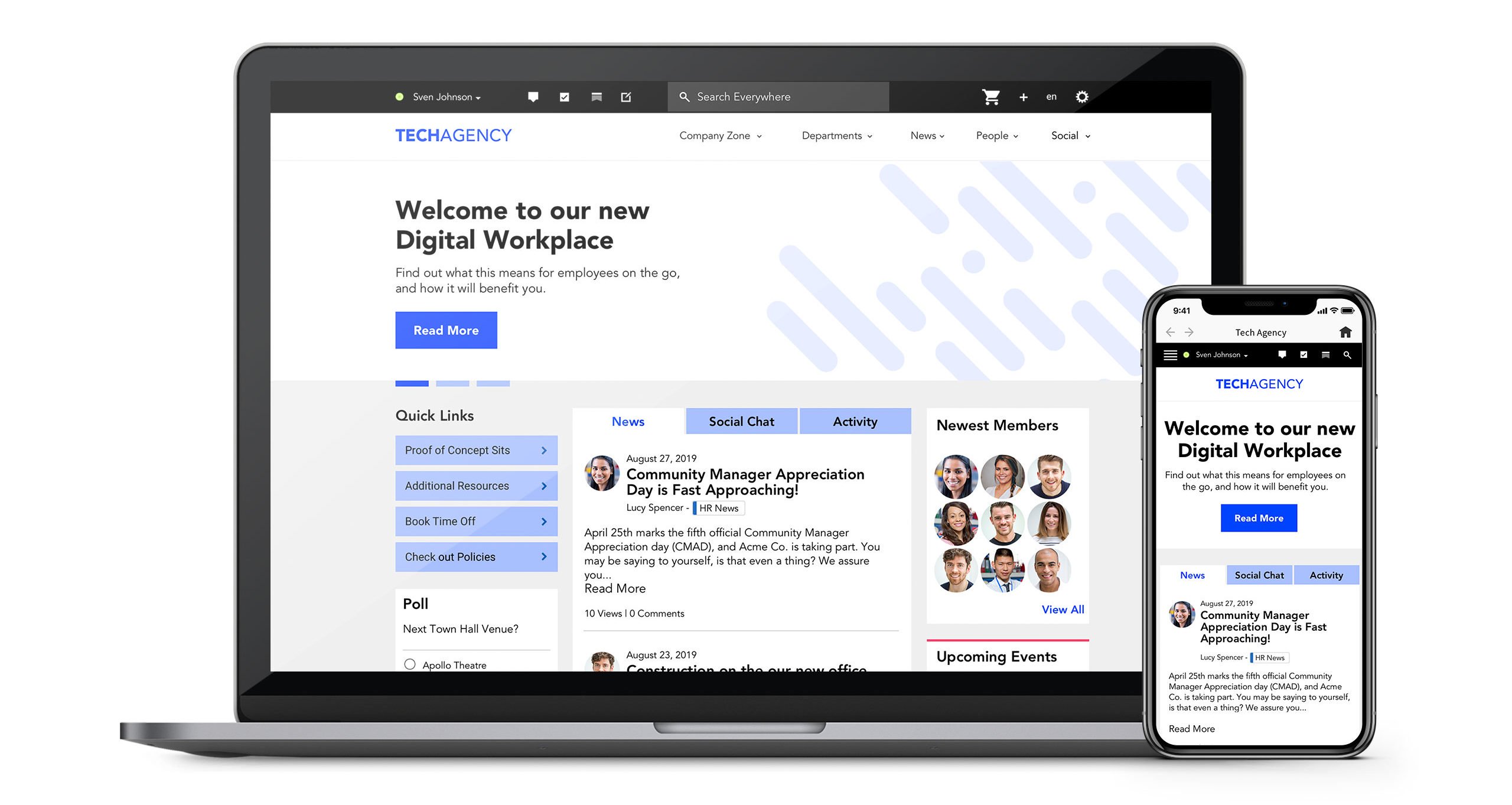
After: Consistent, scalable, and built on a shared system.
Platform modernization
Igloo Flex
Modernized Igloo’s legacy intranet, the groundwork that became Igloo Flex
Adoption
325+
Supports 325+ organizations, including Hard Rock Cafe and other global enterprise customers
Scale
1M+
Supports over 1 million users across distributed enterprise workforces
Efficiency
50%
Reduced design time by 50% by creating a shared design system and getting teams to adopt it
Retention
97%
Maintained high customer retention across enterprise clients
UX Research
0 to 1
Established the Igloo Lighthouse UXR program to scale user insight and guide decision making
Emerging tech
AI
Partnered with Product to bring AI features into the platform
Delivery
Platform
Gave multiple teams a shared way to deliver consistently
Lessons
Scaling starts with the system,
not the screens
Modernizing a legacy platform isn’t about redesigning screens. It’s about rebuilding the underlying system so it can scale.
Structure enables consistency as systems grow
Design systems only work when teams use them in practice
Reusable components reduce repeated effort across teams
Long-term alignment prevents future fragmentation