How We Turned Igloo’s Aging Platform into Igloo Flex
A multi-year modernization of Igloo’s enterprise platform focused on architecture, system design, and long-term scalability.
Role: UX Manager (2023–2025)
Team Structure: 4 feature teams • 9 designers
Platform: Enterprise SaaS intranet
Timeline: 2020–2025
Focus: Modular architecture, design system, UX alignment
Tools: Figma, Jira, Miro, AI-assisted workflows
Executive Summary
Rebuilding the foundation of a legacy enterprise product
Igloo Flex (originally NOVUS) was a multi-year initiative that became central to Igloo Software’s evolution. The legacy platform had become expensive to maintain — small changes often took weeks rather than days, slowing our response to customer needs and increasing development costs.
Across three roles — Senior Product Designer, Lead UX Designer, and UX Manager — I led the structural reset that reduced development friction and re-established UX standards across four feature teams. I initiated the shift toward reusable components, started the Igloo Flex design system, and introduced structured design reviews to align UX, Product, and Engineering before work entered development.
The result was a more coherent, scalable platform in which teams built on shared systems rather than custom solutions.
[Image Cue: Product Overview]
→ A clean, polished screenshot of the Igloo Flex homepage or dashboard.
Purpose: Establish credibility immediately. Show this is a real, shipped product.
Scope & Organizational Context
Nine designers. Four feature teams. Core to the company’s future.
Flex was not a side initiative. It was core to the company’s future direction, particularly as we needed to modernize to support frontline worker use cases and reduce the cost of development on what became known as “Igloo Classic.”
Over the lifespan of Flex, nine designers contributed to the initiative. At peak, four feature teams operated simultaneously, each led by a designer within a unified UX organization.
As designers and developers rotated in and out over several years, I became the continuity layer — carrying product and UX context from where the platform began to where it needed to go.
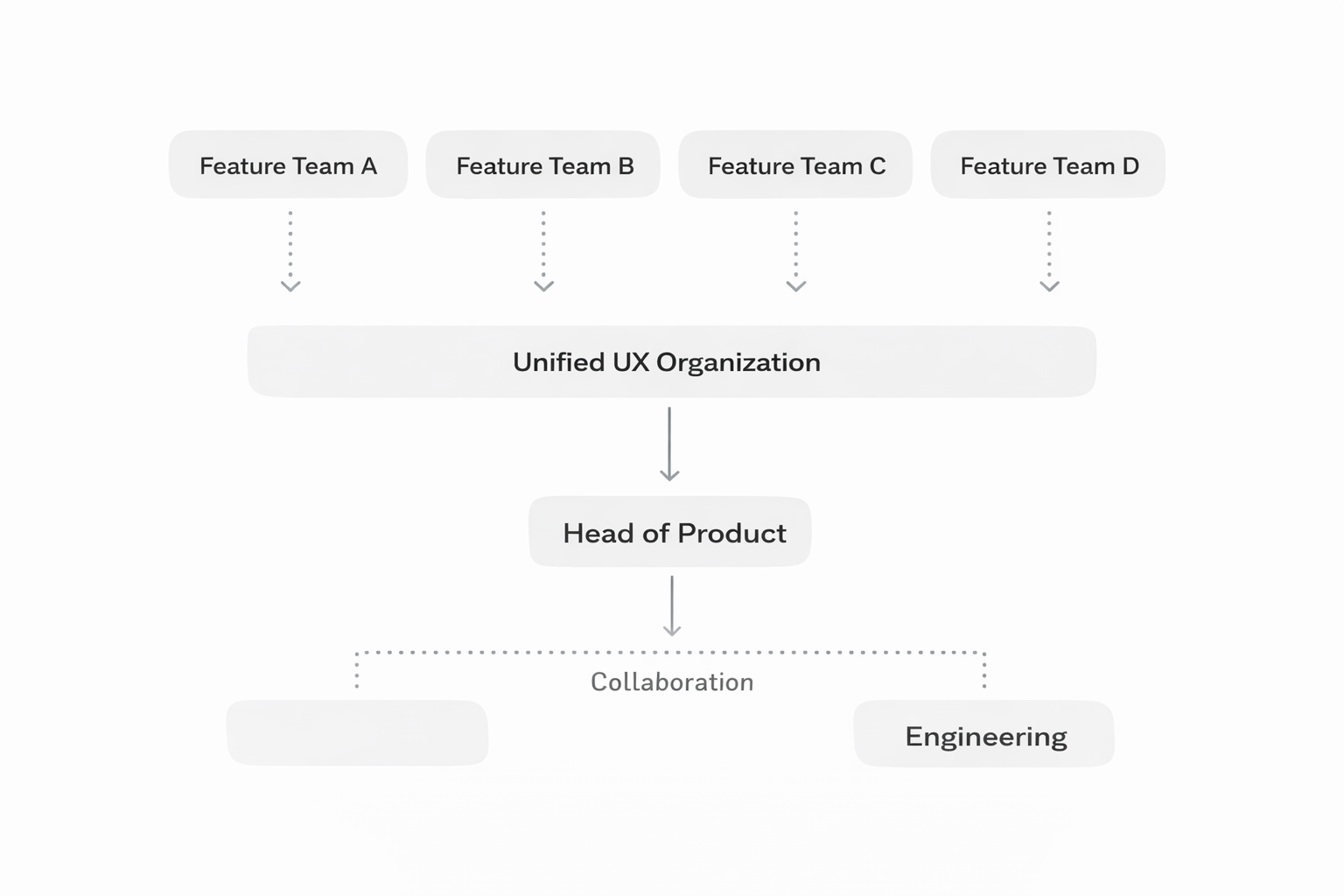
Strategic Reset
Shifting from feature delivery to modular system architecture
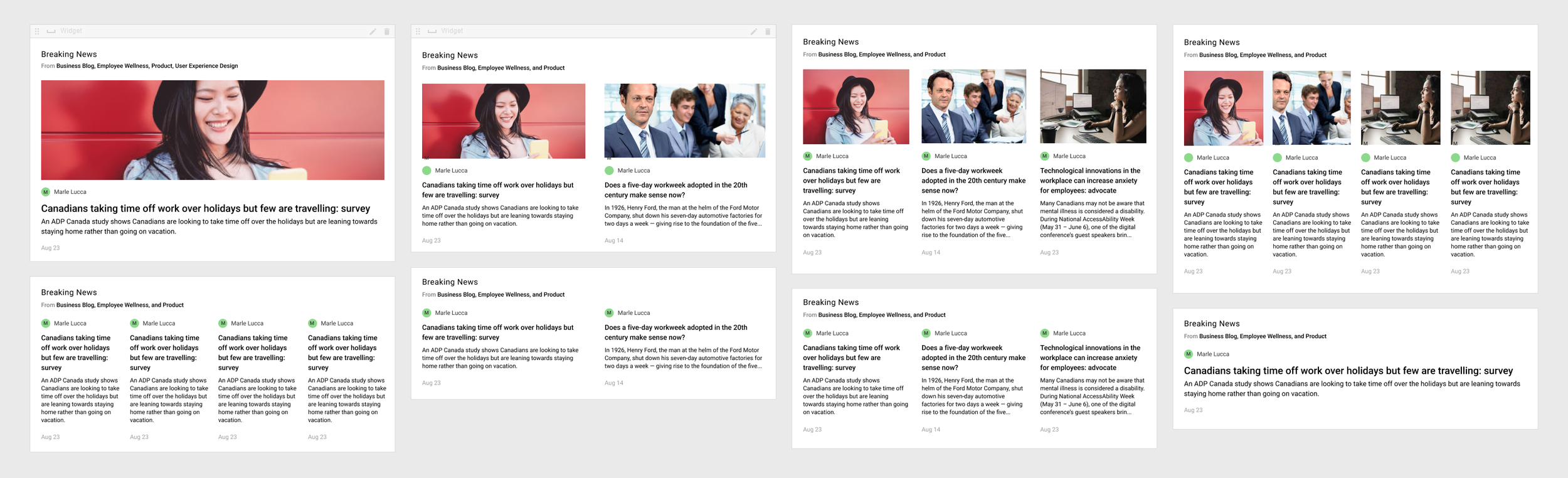
As Flex gained traction, incremental feature work began introducing subtle variation. Even within a single component, like the News Widget, display styles, hierarchy, and metadata treatment risked diverging by context. Without guardrails, similar widgets could evolve differently across surfaces.
I initiated a modular shift in partnership with Product Strategy leadership, moving from page-level solutions to reusable, system-defined components.
Using the News Widget as a model, we defined clear display modes — Featured, Grid, and List — instead of creating one-off layouts for every scenario.
This meant:
Consolidating layout variations into structured display presets
Defining consistent component states (loading, empty, error)
Standardizing metadata and content hierarchy rules
Elevating the design system from guidance to enforced infrastructure
There was pressure to keep shipping features. But without system discipline, even configurable components like News would slowly fragment. The reset ensured flexibility through structure — not variation.
Hands-On Design Leadership
Designing the system while leading the team
I personally redesigned several high-usage Page Builder widgets, including Hero, Button, and Links, and restructured the overall Page Builder experience. I designed the Admin Settings architecture, article reading and composition flows, and defined foundational interaction rules for navigation, spacing scales, and content hierarchy.
In Figma, I built and maintained the shared component library used across all feature teams, defining variants and interaction states that engineering could reliably implement. I routinely reviewed production builds to ensure parity between design intent and shipped experience.
In Miro, I facilitated discovery workshops with internal teams and customers to rethink navigation and structure. In Jira, I linked design work directly to engineering tickets to reduce ambiguity and clarify acceptance criteria.
AI tools gradually entered our workflow, primarily to accelerate early ideation, pressure-test copy clarity, and critique layouts before validation. They improved iteration speed — they didn’t replace judgment.
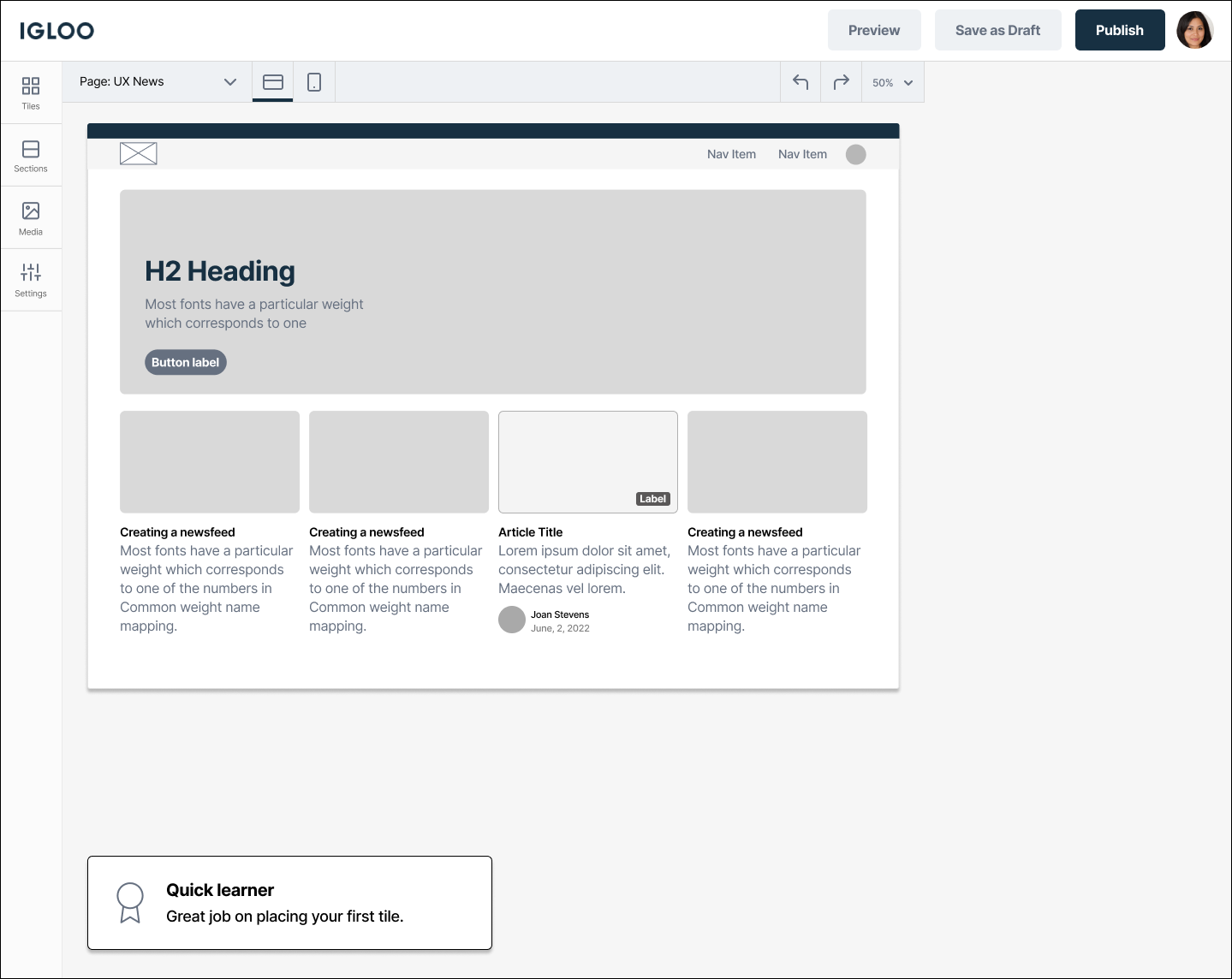
Page Builder editing surface — enabling non-technical users to compose structured, system-defined pages using standardized widgets.
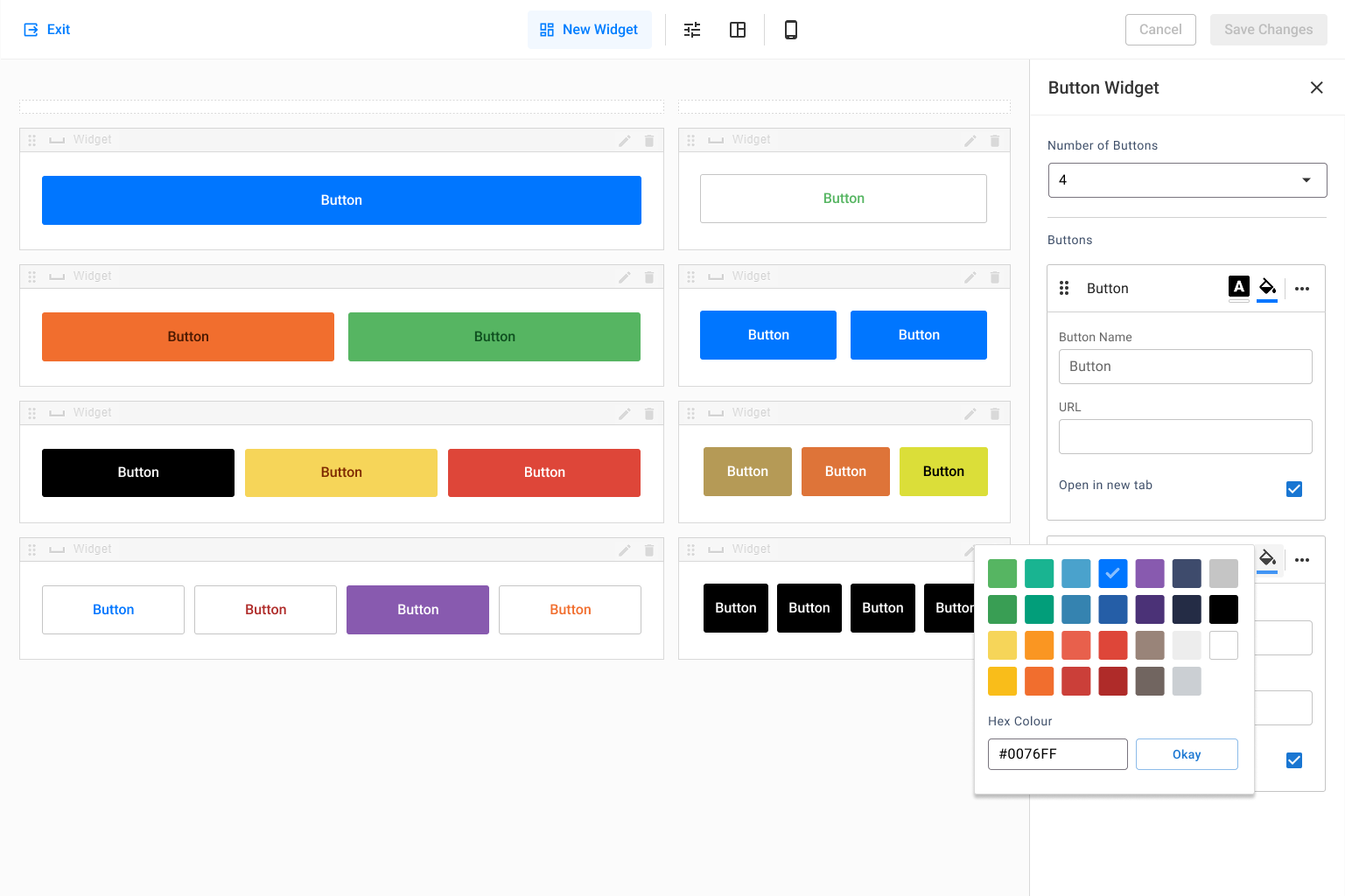
A governed configuration system balancing brand flexibility with system constraints — including dynamic layout rules, style presets, and interactions.
A Hard Compromise
Balancing modernization with delivery pressure
Page Builder illustrates the tension.
In its early version, speed mattered more than structure. A lead developer mocked up a modular page framework to help us move quickly. Years later, overlapping widgets and a flexible but unwieldy navigation system created usability challenges.
We renamed and regrouped widgets, simplified configuration flows, and mitigated confusion. But when engineering capacity dropped significantly — from roughly fifteen developers to five — a full rebuild was no longer realistic.
We chose to mitigate friction rather than pursue a clean slate.
Modernization often chooses the least costly imperfection.
Operational & Cultural Change
From reactive UX to system-wide alignment
Over time:
Engineering clarification loops decreased.
QA issues tied to inconsistent patterns declined.
Feature teams built from shared Figma components instead of custom layouts
PMs referenced UX personas and principles directly in Jira tickets.
Before structured design reviews, teams were often surprised when features launched. After introducing internal UX reviews, cross-functional reviews, and company-wide showcases, stakeholders were aligned earlier and better prepared to support customers.
Product conversations shifted from “what are we building?” to “why are we building this?”
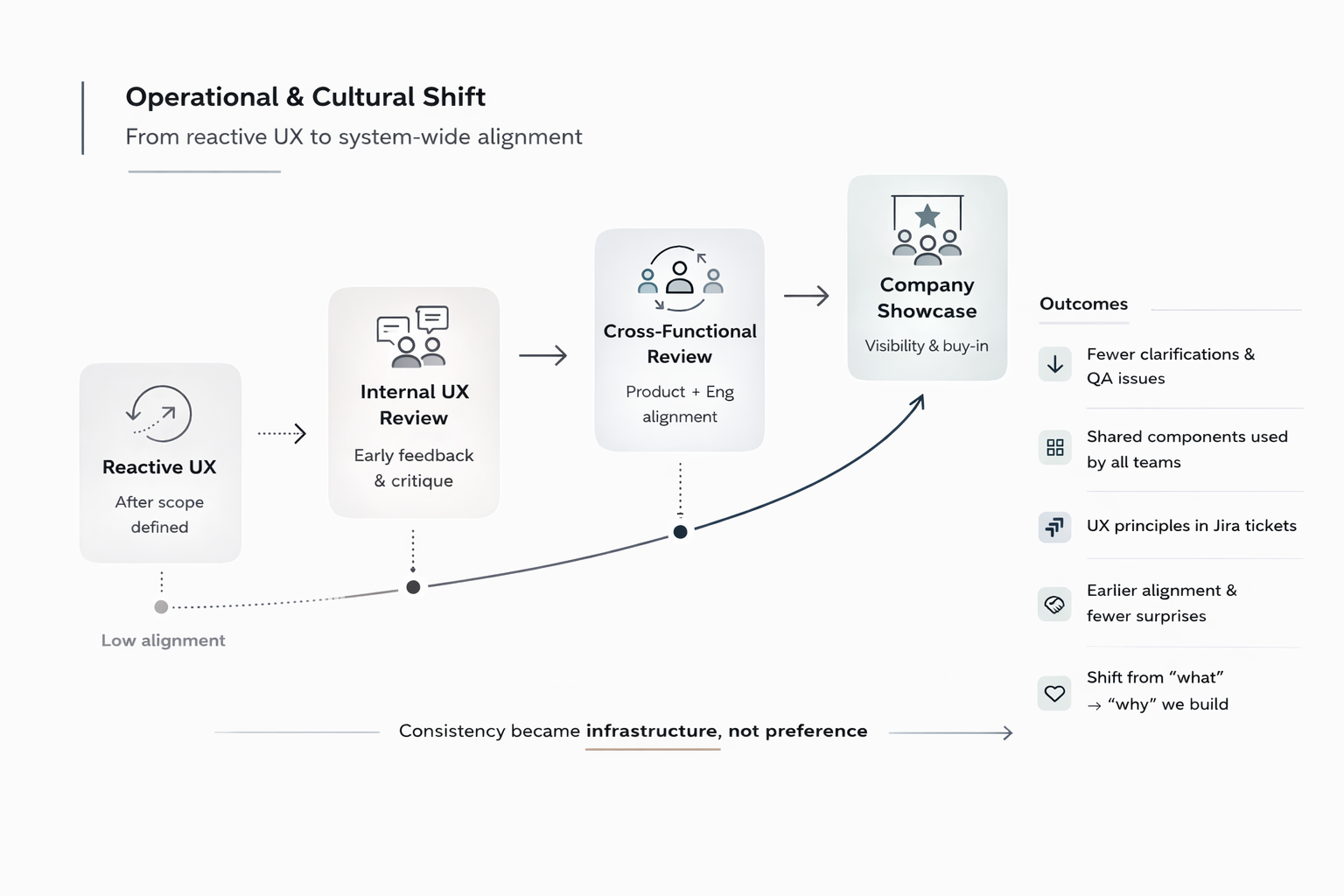
A structured review flow moved UX upstream and reduced downstream friction.
Business Impact
Strengthening product maturity during acquisition
Flex strengthened the platform’s structural maturity during a period that ultimately culminated in acquisition by Appspace.
On September 11, 2025, Appspace announced the acquisition of Igloo Software — a move that added 325+ enterprise customers and marked Appspace’s third acquisition in the workplace communications category. The combined organization expanded into a 400+ person team serving Fortune 500 companies across healthcare, retail, manufacturing, and hospitality.
You can read the official announcement here:
👉 https://www.appspace.com/igloo/
Modernization itself did not cause that outcome. But it ensured the product entering that transition was coherent, scalable, and defensible.
By the time acquisition discussions materialized, Flex had:
Reduced architectural drift across the intranet platform
Standardized core UI patterns through a shared design system
Introduced structured UX reviews before engineering commitment
Shifted teams toward reusable components instead of one-off layouts
That mattered. In acquisition environments, product clarity and system maturity reduce risk.
Internally, UX had already moved from reactive interface updates to intentional system design. That cultural shift — aligning Product, Engineering, and Customer Success earlier in the cycle — positioned the platform to integrate into a broader unified workplace experience ecosystem that included digital signage, space reservations, visitor management, and mobile.
The acquisition validated Igloo’s strategic direction in the enterprise intranet market. The modernization work ensured the product was ready for it.

Reflection
Modernization under constraint
Modernization isn’t glamorous. It’s disciplined systems work under constraint.
It requires protecting standards while staying hands-on in the craft. I enjoy that balance — shaping architecture while still refining the pixels.
Flex marked a shift from incremental iteration to intentional architecture. I was involved in that shift from foundation to interface, carrying continuity as the team and organization evolved.